Emission Reduction Strategies Series, Part 4: Materials and Waste – Reducing Emissions and Unlocking Resource Efficiency
Author: Elsie Andreyev
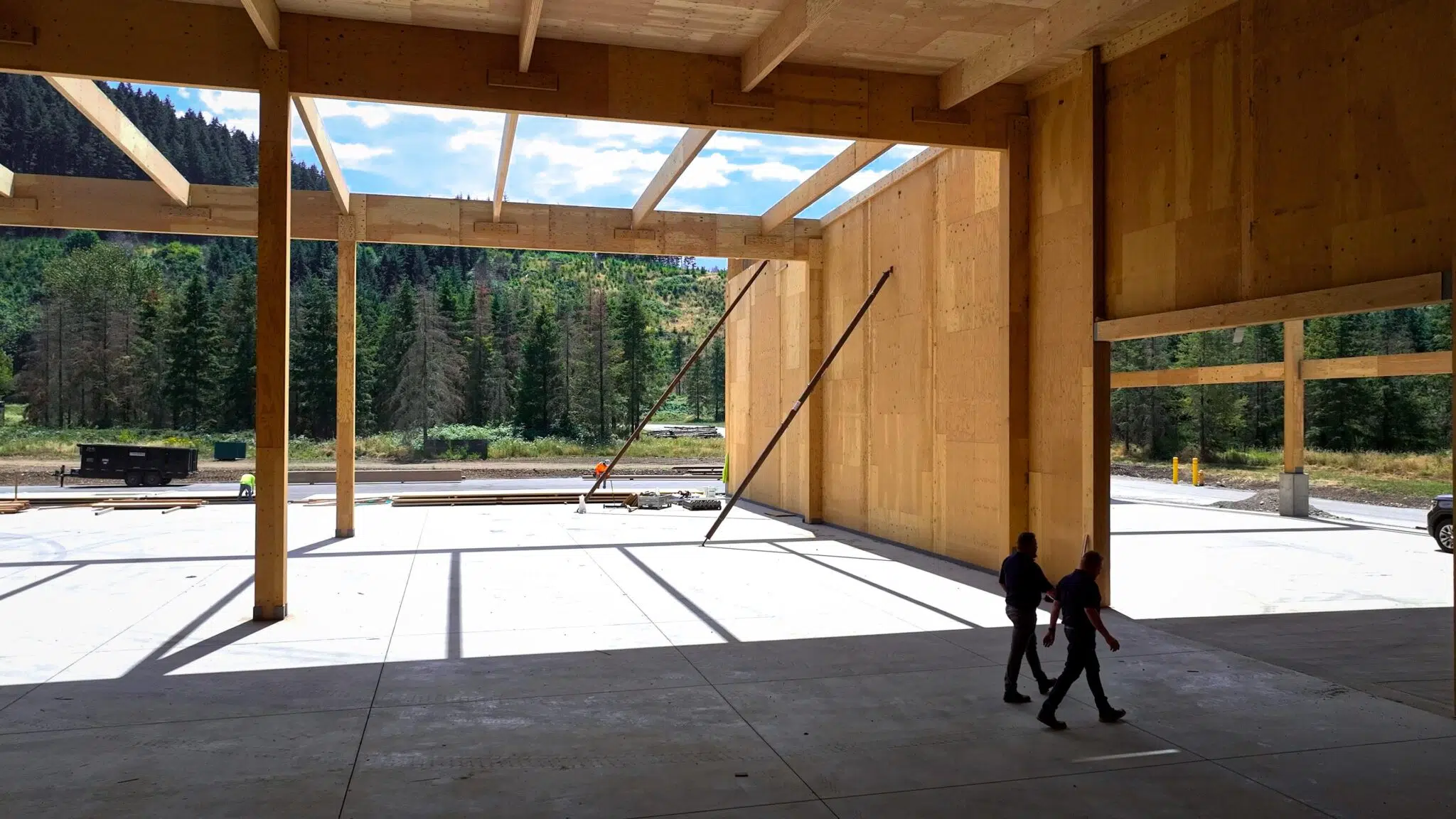
Workers at Freres Engineered Wood in Oregon’s Santiam Canyon manufacture mass timber panels and wooden beams that can be used in place of steel and concrete in the construction of large commercial and multifamily buildings.
Beyond simply meeting climate targets, reducing GHGs drives significant environmental and operational benefits across an organization. By rethinking how energy is used, how people and goods move, and how resources are managed, organizations can create systemic improvements that strengthen resilience, efficiency, and long-term sustainability.
Materials & Waste
Materials and waste strategies go beyond simply cutting greenhouse gas emissions. They can also bring significant operational, economic, and environmental benefits. The way an organization sources, uses, and disposes of materials affects its carbon footprint, its supply chain stability, and its capacity for innovation. By shifting from a traditional linear or “take-make-dispose” model to a circular approach, organizations can reduce lifecycle emissions while improving efficiency, resilience, and competitiveness.
Circular strategies such as reuse, recycling, and extending product lifecycles help reduce embodied carbon and lower lifecycle emissions across the value chain. They conserve raw materials, improve resource efficiency, and make supply chains more resilient by reducing dependence on scarce or volatile inputs.
Investing in greener materials and developing industrial symbiosis creates operational advantages, including lower waste costs, more efficient product development, and smoother facility operations.
Over time, these practices produce wider benefits that extend beyond individual facilities or products. They encourage collaboration across industries, drive innovation in materials and processes, and support cost savings while advancing broader sustainability goals.
Examples:
- Byproduct exchange networks (industrial symbiosis)
- Recycled industrial inputs (steel scrap recycling)
- Landfill gas recovery / cogeneration
- Mass timber / green structural materials
- Reclaimed building materials / architectural salvage
Stay tuned for the final installment of the series, where we’ll cover water-energy optimization
Join the Carbon Footprint Registry community for access to emission reduction strategy case studies, policy updates, and more.