GHG Protocol Revision: What Organizations Need to Know Now
By: Ignacio Fernandez, Senior Policy Advisor
Insights from the Climate Leadership Conference event: Carbon Disclosure & Decarbonization Forum
At the Climate Leadership Conference event: Carbon Disclosure & Decarbonization Forum, held in Pasadena on March 19–20, a key topic was the ongoing revision of the GHG (Greenhouse Gas) Protocol, the foundational accounting framework that supports nearly all major climate disclosure systems in use today. Pankaj Bhatia, Global Director, Greenhouse Gas Protocol at the World Resources Institute (WRI), provided attendees with an up-to-date overview of the scope and plans for these revisions.
The GHG Protocol was established in 1998 through a partnership between WRI and the World Business Council for Sustainable Development (WBCSD). Over the subsequent decades, it has developed three main corporate standards: the Corporate Standard (2001), the Scope 3 Standard (2011), and the Scope 2 Guidance (2015). On January 30, 2026, a fourth standard, the Land Sector and Removals (LSR) Standard, was introduced and will take effect on January 1, 2027.
The GHG Protocol has many downstream dependencies. In 2023, 97% of S&P 500 companies reported using it. IFRS S2, the EU’s ESRS, California’s SB 253, TCR’s (The Climate Registry’s) own General Reporting Protocol (GRP), the Science Based Targets initiatives (SBTi), and CDP (formerly the Carbon Disclosure Project) all depend on it. When the GHG Protocol is updated, all these frameworks are affected.
Six to seven standards are being revised simultaneously, including market-based instruments, project accounting standards being aligned with the International Organization for Standardization (ISO), and land sector guidance. Key priorities include strengthening the ISO partnership, maintaining a robust business input channel, and exploring a ‘no netting’ approach that would display gross emissions inventories and leave netting decisions to regulators. Artificial intelligence is used to process and synthesize stakeholder feedback, with findings guiding technical committees, alignment with the International Sustainability Standards Board (ISSB), and working groups. Emerging areas include new subcategories such as facilitated emissions.
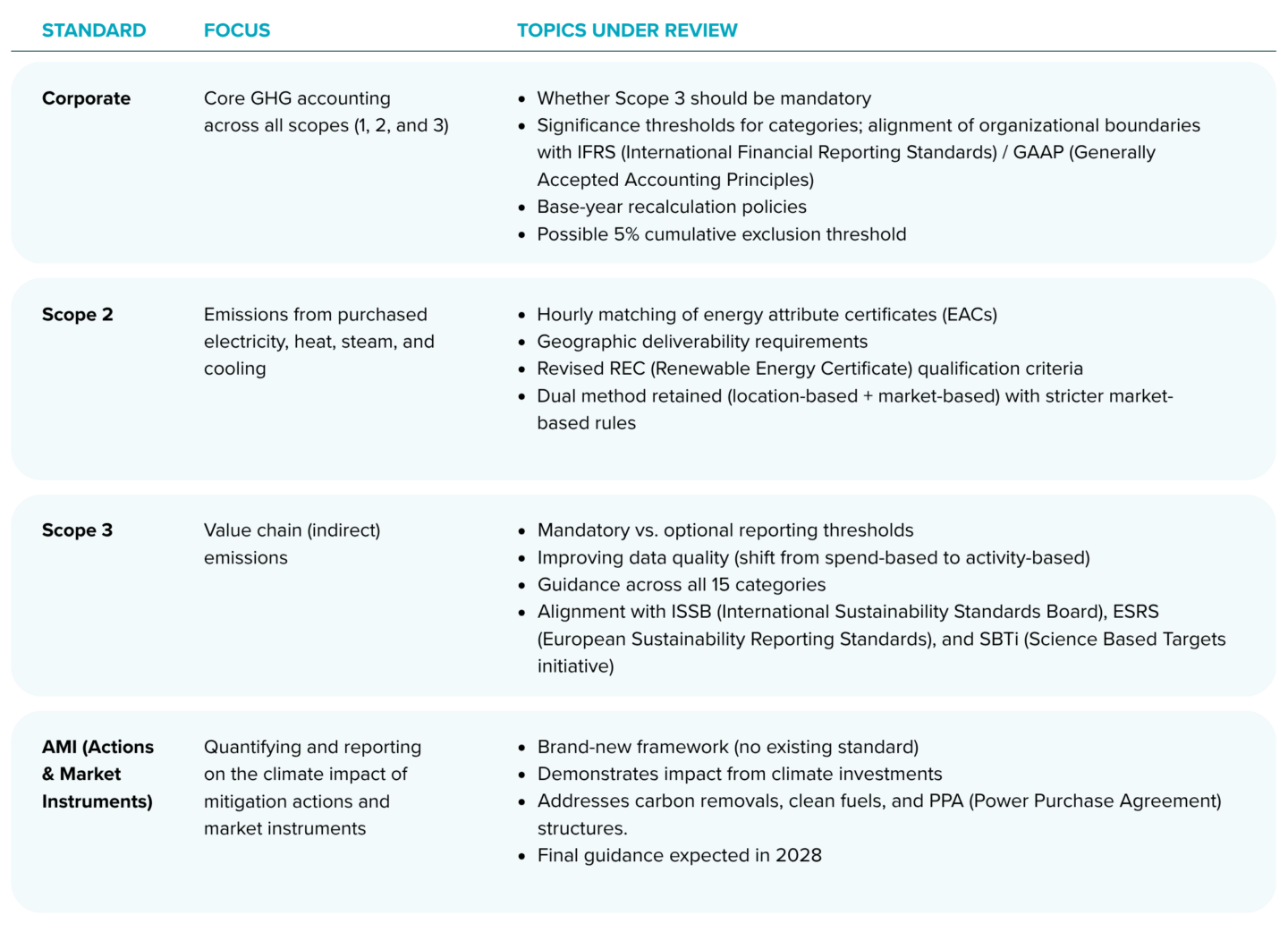
The Four Technical Working Groups and Their Focus Areas
The revision is structured into four Technical Working Groups (TWGs), each responsible for a specific core standard.
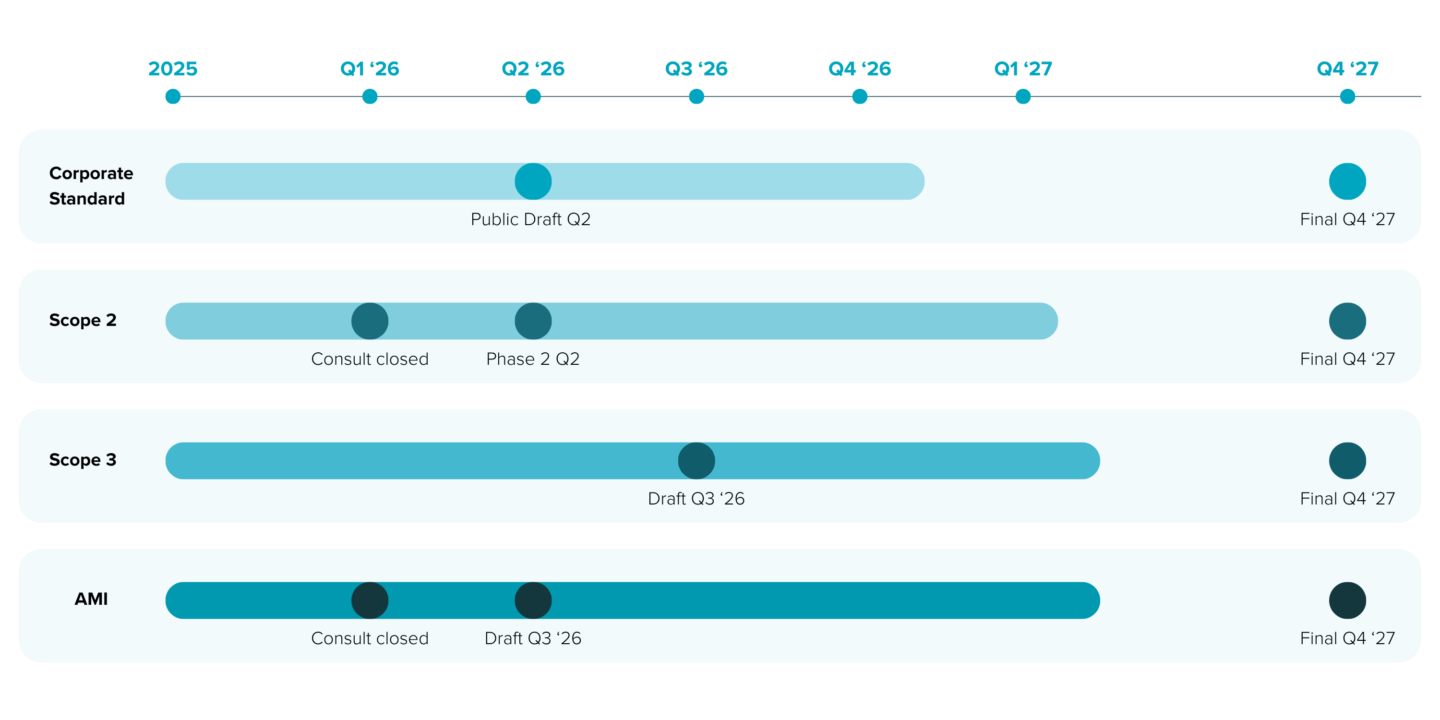
Revision Timeline at a Glance
The revision is currently in an active consultation and drafting phase. The first public draft of the Corporate Standard is expected by Q2 2026.
As the GHG Protocol revision accelerates, TCR members will receive step-by-step recommendations, deeper technical analysis, and tools to prepare for the transition. Members also receive expanded guidance, practical recommendations, and early insights on Scope 2, the new Land Sector & Removals Standard, and other emerging requirements.
If you’d like access to the full set of insights and resources, consider joining the TCR community.