Global Climate Leadership in an Era of National Retreat:
The Expanding Role of Subnational Action
By: Amy Holm, Executive Director and Ignacio Fernandez, Senior Policy Advisor
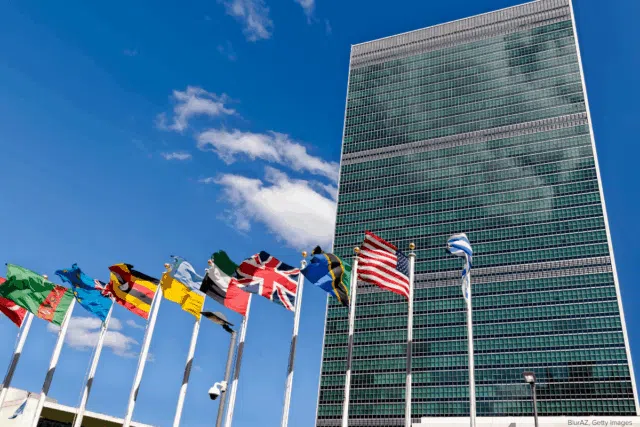
The White House’s Memorandum directing the United States to withdraw from dozens of international organizations, including the United Nations Framework Convention on Climate Change (UNFCCC) and the Intergovernmental Panel on Climate Change (IPCC), reverberates far beyond American borders. For the international climate community, this announcement raises urgent questions about the continuity of global cooperation, the integrity of international climate processes, and the path forward for collective action.
Yet within this disruption lies a profound opportunity to strengthen and expand a model of climate leadership that has been gaining momentum for years: coordinated subnational action on the global stage.
What U.S. Withdrawal Means for International Climate Processes
The United States’ potential departure from the UNFCCC and IPCC creates both procedural and substantive challenges for international climate governance. These institutions depend on broad participation to function effectively, and the absence of the world’s largest historical emitter and second-largest current emitter undermines their comprehensiveness and legitimacy.
The UNFCCC serves as the primary forum for international climate negotiations, providing the framework for global cooperation from the 1997 Kyoto Protocol through the 2015 Paris Agreement. U.S. withdrawal weakens multilateral coordination at precisely the moment when accelerated action is most urgent. The IPCC, meanwhile, is the world’s authoritative source for climate science, synthesizing research from thousands of scientists worldwide. Losing the participation and funding contributions of a major scientific power diminishes the institution’s capacity and reach.
Beyond these specific organizations, this withdrawal signals a broader retreat from multilateralism that could embolden other nations to reconsider their commitments or slow their ambitions. The ripple effects extend to climate finance, technology transfer, and capacity-building initiatives that depend on leadership from major economies.
For the international community, this creates immediate practical challenges. How will negotiations proceed when one of the world’s largest economies is absent from the table? How will developing nations access the support promised through international frameworks? How will global emissions trajectories be managed when a major emitter operates outside coordinated accountability mechanisms?
Subnational Actors: Not a Backup Plan, but a Proven Alternative Model
The good news is that subnational actors have already demonstrated their capacity to fill gaps left by national governments and, increasingly, to drive climate action independent of federal mandates. Cities, states, provinces, corporations, universities, and civil society organizations across the globe are not waiting for national governments to act. They are measuring emissions, setting ambitious targets, implementing solutions, and collaborating across borders.
This is not a new phenomenon, but rather an acceleration of a trend that has been building over decades. Consider the scope of existing subnational climate leadership:
Cities and metropolitan regions representing hundreds of millions of people have committed to carbon neutrality through networks such as C40 Cities, ICLEI, and the Global Covenant of Mayors for Climate & Energy. These urban centers account for most global emissions and economic activity, making their commitments highly significant.
State and provincial governments operating through alliances such as the US Climate Alliance and the Under2 Coalition bring together jurisdictions representing over 1.75 billion people and more than 50% of global GDP. These governments possess significant regulatory authority over energy systems, transportation, land use, and economic development.
Corporations increasingly operate under investor pressure and supply chain requirements that transcend national policies. The growing adoption of Science-Based Targets and participation in initiatives such as RE100 demonstrate that business climate action operates on its own logic, driven by risk management, competitiveness, and stakeholder expectations.
Universities and research institutions, such as the Global Climate Policy Project and the Global Alliance of Universities on Climate (GAUC), continue to advance climate science, develop solutions, and prepare the next generation of leaders, regardless of national policy positions.
Public-private sector initiatives like America Is All In bring crucial advantages to global climate action. They operate closer to the sources of emissions and the impacts of climate change. They can move faster than national governments, experimenting with scalable policies and solutions. They maintain commitments across political cycles that might derail national action. Crucially, they demonstrate that climate leadership is not dependent on federal mandates but can be driven by local necessity, economic opportunity, and institutional values.
The Climate Registry’s Role: Organizing Subnational Presence at Global Forums
For years, The Climate Registry (TCR) has played a vital role in ensuring that subnational voices are heard in international climate processes, even when federal participation has been uncertain. Our organization of U.S. subnational delegations to UNFCCC Conferences of the Parties has provided a platform for states, cities, tribes, businesses, and NGOs to engage directly with the international community, share their climate commitments, and demonstrate American climate leadership beyond Washington.
This work has proven particularly valuable during previous periods of federal disengagement. When the U.S. federal government withdrew from the Paris Agreement during the previous administration, subnational delegations organized by TCR and partner organizations helped maintain international confidence in American climate action by demonstrating the breadth and depth of commitments from governors, mayors, business leaders, and institutional actors.
These delegations serve multiple crucial functions. They provide accountability and transparency by reporting on subnational progress to the international community. They facilitate knowledge exchange, enabling jurisdictions to learn from international peers and to share successful approaches. They maintain diplomatic relationships and trust that transcend federal policy shifts. And they demonstrate to the global community that climate commitments in major economies persist even when national governments retreat.
The presence of robust subnational delegations at COPs has become increasingly influential. International negotiators and observers recognize that understanding climate action at the local level requires engaging with state and provincial governments, not just federal representatives. This recognition has elevated subnational actors from side events to central participants in global climate discussions.
Expanding the Model: Opportunities for Greater Subnational Participation
The current moment demands not only the continuation of existing subnational engagement but also a significant expansion of it. Several opportunities to deepen and broaden subnational participation in international climate processes warrant exploration:
Strengthening Formal Recognition in International Processes: Working with the UNFCCC secretariat and national governments that remain committed to the Paris Agreement, there is potential to establish more formal roles for subnational actors in climate negotiations. These roles could include increasing designated speaking slots to address the country party members and opportunities to participate in technical working groups.
Building Cross-Border Subnational Networks: Expanding connections among subnational actors across countries creates powerful coalitions. A state or province in the U.S., Canada, Germany, or Brazil working together on specific sectoral challenges (such as renewable energy deployment, transportation decarbonization, and agricultural emissions) can drive progress despite national positions and create models that influence policy globally.
Enhancing and Financing Credible Measurement and Reporting Infrastructures: Voluntary reporting platforms, such as those provided by TCR, enable subnational actors to establish credible baselines, track progress, and report transparently to international audiences. Expanding and supporting these platforms strengthens the foundation for coordinated action.
Creating Subnational Finance Mechanisms: One critical gap created by reduced federal participation is climate finance. There is significant potential to develop mechanisms that enable subnational actors to access or provide climate finance for mitigation and adaptation projects, bypassing national intermediaries when necessary.
Expanding Educational and Capacity-Building Programs: Many jurisdictions worldwide want to take climate action but lack technical capacity or institutional knowledge. Local governments, academic and research institutions, and partner organizations can expand programs that build capacity among subnational actors globally for measurement, target-setting, and implementation planning.
Coordinating Advocacy for Ambitious Policy: Subnational networks can collectively advocate for stronger climate policies at the national and international levels, demonstrating political will that may be absent from some national governments and building pressure for more ambitious action.
The International Imperative for Measurement and Transparency
For the international community, the U.S. federal government’s withdrawal makes credible measurement and transparent reporting by subnational actors more urgent than ever. When national governments step back from international frameworks, the world needs alternative mechanisms to track emissions trajectories, monitor progress, and maintain accountability.
This is where voluntary reporting platforms serve a global public good. Organizations and jurisdictions that measure and report their greenhouse gas emissions through credible, verified systems provide the international community with essential data that would otherwise be lost. This transparency builds trust and demonstrates the commitment sought by international agreements.
For subnational actors considering whether to begin measuring and reporting emissions, the international stakes are now higher. Reliable data contributes to global understanding of emissions trends, and transparency demonstrates that regional climate commitments persist despite national policies, and participation in international reporting systems helps fill gaps in global climate accounting.
A Call to Global Subnational Leadership
The U.S. withdrawal from international climate frameworks is a clear setback for coordinated global action. It weakens key institutions and creates uncertainty about emissions trajectories and international cooperation. But it also underscores the essential role that subnational actors must play in sustaining global climate progress.
TCR remains committed to organizing and expanding U.S. subnational participation in international climate processes. We will continue to bring delegations of states, cities, tribes, businesses, and institutions to COPs and other global forums. We will work to formalize and strengthen the role of subnational actors within international frameworks. We will expand our platforms and programs to serve the growing global community of jurisdictions committed to transparent, credible climate action. We invite subnational actors worldwide to join this effort.