Women Leading the Way: Environmental Trailblazers to Celebrate Women’s History Month
By: Anna Benjamin
In honor of Women’s History Month, we celebrate the women who have pioneered and propelled the environmental movement. From shaping climate policy and advancing scientific discovery to advocating for environmental justice and mobilizing global youth, these leaders have played a transformative role in protecting our planet. Their work continues to inspire and empower others to take climate action and limit contributions to climate change for a more just and sustainable future.
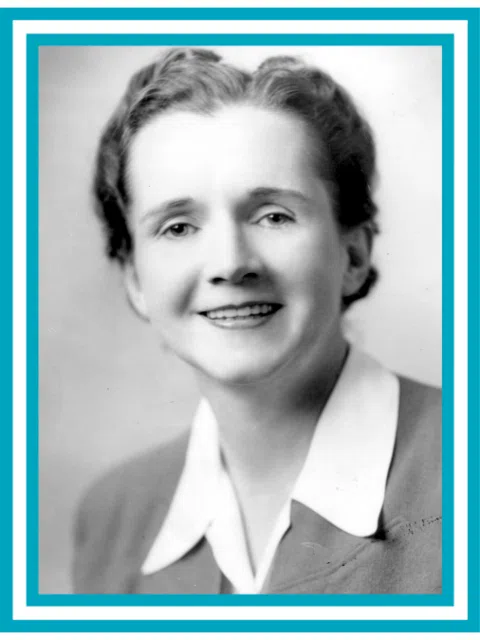
Rachel Carson
Rachel Carson was an American biologist, writer and environmental advocate best known for her groundbreaking book Silent Spring. Through her vivid writing, Carson expressed both her love for the natural world and her concern for future generations. Her work has had lasting impacts as it awakened public awareness about environmental issues and helped launch the modern environmental movement.
Over the course of her career, she published several influential works about marine life and environmental issues, including Under the Sea-Wind, The Sea Around Us, and Silent Spring. Silent Spring remains Carson’s most significant contribution to environmental advocacy. In it, she warned the public about the dangers of chemical pesticides, particularly Dichlorodiphenyltrichloroethane (DDT), and described a haunting future in which birdsong disappeared due to ecological harm.
Although Carson did not live to see the full impact of her work, the book sparked national debate, prompted federal investigations into pesticide use, and ultimately led to the banning of DDT. Today, Carson’s legacy lives on as her work continues to inspire environmental awareness and climate action around the world.
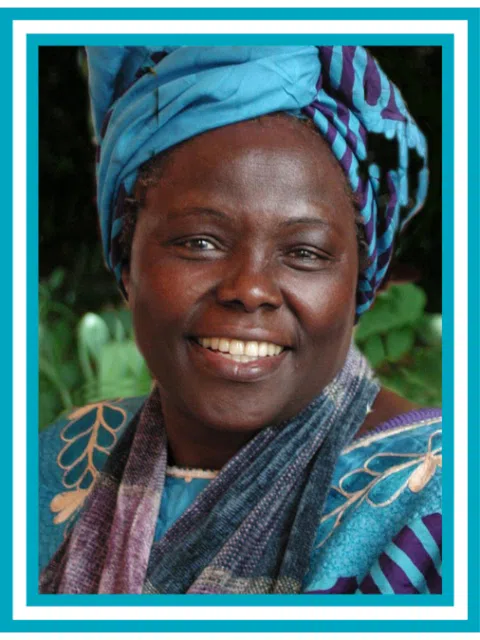
Wangari Maathai
Wangari Maathai was a political, social, and environmental activist who championed the connection between human rights, democracy, and environmental protection. Born in Nyeri, Kenya, she became the first woman in East and Central Africa to earn a doctorate degree, and later the first African woman to receive the Nobel Peace Prize.
As a member of the National Council of Women of Kenya (NCWK), Maathai learned about the environmental challenges facing rural Kenyan communities, particularly women. In response, she founded the Green Belt Movement, a grassroots initiative that mobilized women to plant trees to restore degraded landscapes and improve their livelihoods. Tree planting helped prevent soil erosion, retain groundwater, provide food, and supply firewood, while also empowering women economically and socially. The movement expanded across Africa and has led to the planting of tens of millions of trees.
Beyond environmental conservation, Maathai was a passionate advocate for women’s rights and democratic reform. She spoke internationally about the links between environmental degradation, poverty, and political oppression, becoming a powerful global voice for climate action and social justice. Her legacy continues to demonstrate how environmental stewardship and human rights are deeply interconnected, inspiring action globally.

Greta Thunberg
Greta Thunberg is a 23-year-old Swedish environmental activist who has inspired people worldwide to fight climate change. She is best known for founding Fridays for Future, motivating the younger generation to take climate action.
Thunberg first learned about the climate crisis at age 8, and, by 11, was deeply discouraged by the lack of action, spurring her involvement. Her activism began in 2018, by missing school for nearly three weeks before the Swedish election to sit outside of parliament with a sign reading “Skolstrejk för Klimatet,” or “School Strike for Climate.” What began as a solo protest soon drew many supporters. She eventually returned to school, but continued striking every Friday, creating the Fridays for Future movement.
This movement inspired hundreds of thousands of students worldwide to take part in their own Fridays for Future, amplifying youth climate activism. Thunberg gained international recognition, receiving invitations to speak around the world and being named Time magazine’s 2019 Person of the Year, the youngest ever to earn the title. Thunberg’s climate leadership demonstrates how one person’s actions can have massive impacts on global challenges like climate change.
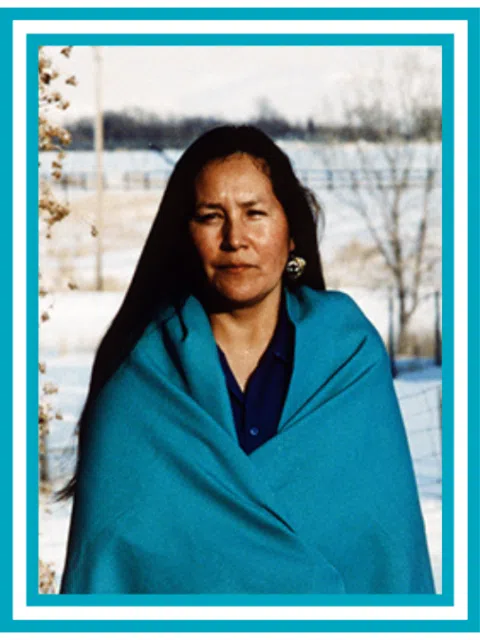
JoAnn Tall
As a member of the Oglala Lakota tribe in South Dakota’s Pine Ridge Reservation, JoAnn Tall is a trailblazer in Indigenous environmental activism. Her work has both protected her tribe’s land and shielded her community from environmental health hazards.
Tall began her environmental activism by raising awareness about the health risks associated with a local uranium mining site. She also opposed a Honeywell nuclear weapons testing site that was proposed on their land, and after establishing a resistance camp of tipis and a sweat lodge, Honeywell abandoned its plans. Later, when AMCOR proposed putting a 5,000-acre landfill on their land, she persuaded the tribal council to reject it, and when the company made the same proposition to another tribe, she helped them reject it as well.
She continued her efforts by co-founding the Native Resource Coalition, a think-tank dedicated to researching and educating people on land preservation and environmental health. Recognized for her work by receiving the Goldman Environmental Prize, she continues to inspire both native and non-native people to protect the environment.
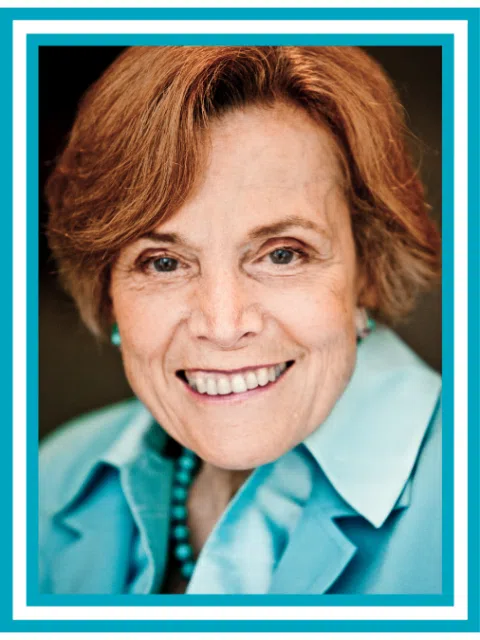
Sylvia Earle
A world-renowned marine biologist and ocean conservationist, Sylvia Earle is often referred to as “Her Deepness” for holding the record for the deepest walk on the ocean floor. Earle developed a fascination with the ocean at an early age, leading her to earn a Ph.D. in marine biology. She has spent decades exploring the world’s oceans, logging more than 7,000 hours underwater, leading over 100 expeditions, and spending two weeks living and working in a habitat 50 feet underwater.
In 1990, Earle was the first woman appointed Chief Scientist of the National Oceanic and Atmospheric Administration (NOAA). She founded Mission Blue and SEAlliance, an ocean advocacy organization developing “Hope Spots” to protect biodiversity, and Deep Ocean Exploration and Research, Inc., a company specializing in underwater technology. She is also an Explorer-in-Residence at the National Geographic Society.
To date, she has authored more than 175 publications, lectured in over 70 countries, and received more than 100 honors, including the Royal Geographical Society Gold Medal and the TED Prize. Her research has been critical in advancing understanding of marine ecosystems and the urgent need to protect them.
Photo: Rachel Carson / U.S. Fish and Wildlife Service Headquarters (Flickr) – CC BY 2.0
Photo: Wangari Maathai / Oregon State University (Flickr) – CC BY-SA 2.0
Photo: Greta Thunberg / Streetsblog Denver (Flickr) – CC BY 2.0
Photo: JoAnn Tall / Goldman Environmental Prize
Photo: Sylvia Earle – TEDxOilSpill – Washington, DC / kris krüg (Flickr) – CC BY-NC-SA 2.0